


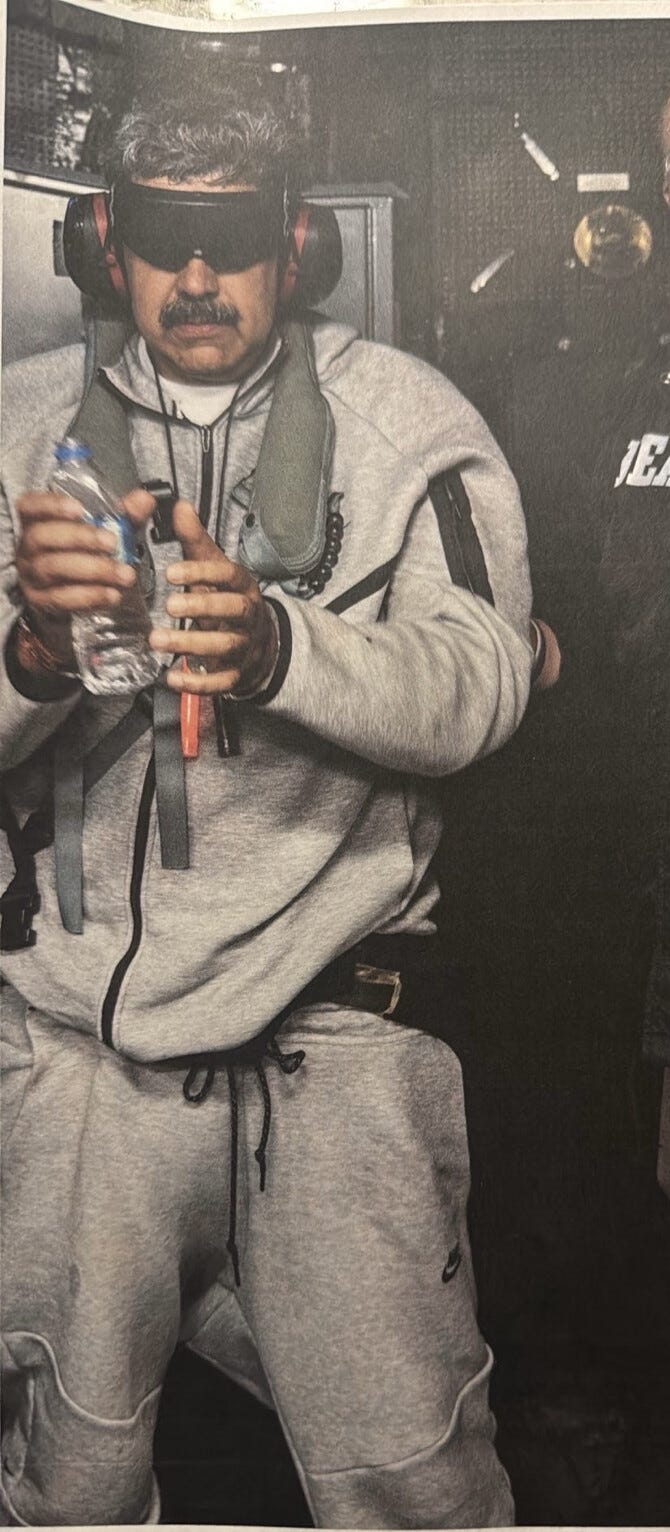
Today’s military intervention in Venezuela is just the latest chapter in the history of United States imperialism. In over two centuries of existence, the United States (US) has carried out a plethora of foreign interventions —including invasions, coups, and covert operations —across nearly every region of the world.
History does not support the US's self-image as a promoter of peace and democracy. As an International Relations scholar, it is baffling to me that, to this day, numerous observers still speak of the US as a guardian of global security, despite its extensive record of unilateral action and strong preference for using military force to prompt regime change. The invasion of Venezuela perfectly illustrates this contradiction.
There is no doubt that Nicolás Maduro's government has committed serious human rights abuses and presided over systematic corruption and plundering of Venezuela’s resources for their advantage. Maduro presided over an increasingly authoritarian and corrupt government which disenfranchised, repressed, and forced millions of Venezuelans to flee their own country.
Yet, the invasion of a sovereign country –that is indeed the definition of the military action that took place today– to remove a head of state, is a blatant violation of whatever little was left of the so-called “rule-based international order”. A decision made by a foreign leader, executed through a unilateral, extraterritorial operation, has nothing to do with the promotion of freedom and democracy for the Venezuelan people. Instead, it demonstrates that Washington DC is ready and willing to use military force to prompt regime change in Latin America –and elsewhere.
Yes, Venezuela ranks among the most corrupt countries in the world, and Maduro’s government used the state to enrich its insiders and silence critics. But if corruption and abuse of power are the measures by which foreign countries can authorize themselves to intervene militarily in another one, then powerful states such as China or Russia (sic) could claim the same right to “liberate” the US from its own flawed leaders —a prospect that the US and its global allies would surely reject, both promptly and emphatically.
If corruption and authoritarian tendencies are now a justification for foreign military intervention, the Trump administration should probably be concerned. The numerous conflicts of interest and cronyism that plague the current administration, the politicization of law enforcement and its repeated efforts to protect its global allies (even those with active arrest warrants by international courts), could soon put Trump at the same risk of being “captured” by a foreign country, and put on trial on foreign soil.
The core issue, then, is not whether Maduro deserved to be “captured”, but who has the legitimacy to decide what to do and by what means. When the US uses its overwhelming military and economic power to unilaterally choose which governments may stand and which must fall, it reinforces the imperial order, rather than international law, which it has created in the world. For many of us in Latin America and beyond, the intervention in Venezuela evokes painful memories of earlier episodes of US involvement in our region and deepens scepticism that such actions are ever aimed at fostering democracy. Most likely, this invasion will just become the next chapter in the 21st century-edition of the US imperialism book.